
On this page
What PGT-A examines
Aneuploidy refers to an extra or missing chromosome. PGT-A is used in IVF treatment to assess chromosome number in embryo biopsy samples, supporting decisions about which embryos to consider for transfer.
How testing fits into IVF
Embryos are cultured to the blastocyst stage. A small sample of outer-layer cells is taken for genetic analysis. The results are reviewed alongside the clinical and laboratory assessment when planning transfer.
Discussing suitability
PGT-A may be discussed in relation to maternal age or previous implantation failure. Your medical history and treatment goals should be reviewed with the team to establish whether testing is appropriate.
Chromosome number and aneuploidy
Human cells normally contain 23 pairs of chromosomes. Aneuploidy means that a chromosome is present in an extra or missing copy. PGT-A examines this question in biopsy material taken from an embryo.
An abnormal embryo chromosome result can arise even when both parents have normal peripheral-blood chromosome tests. Errors may occur during egg formation or embryo development, and maternal age is an important part of the assessment.
From biopsy to a transfer decision
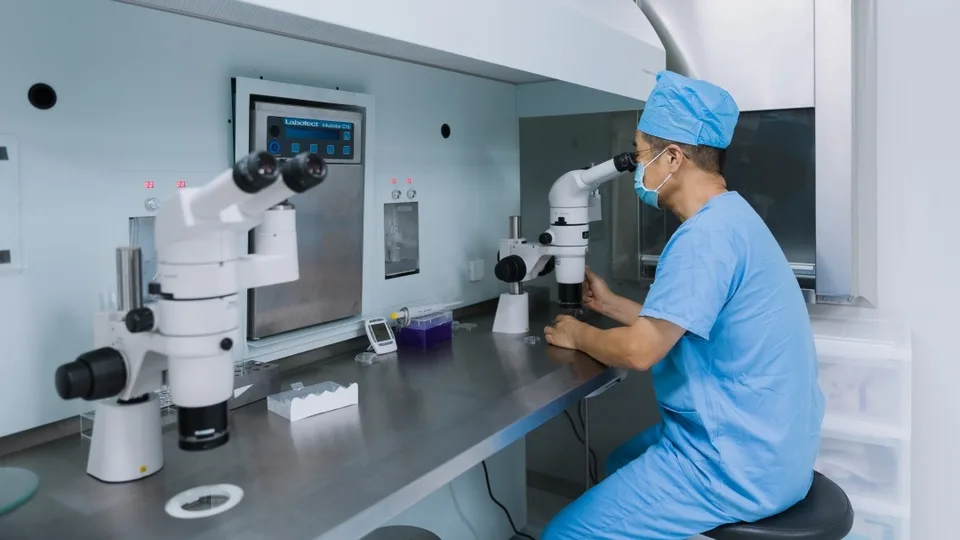
In a planned PGT cycle, embryos are cultured to the blastocyst stage. Outer-layer cells are sampled for analysis while the clinical and laboratory teams coordinate the next stage of treatment.
The doctor reviews the genetic result together with embryo development and the overall treatment history. Patients should discuss the testing report and transfer plan rather than assume that all genetic tests investigate the same conditions.
PGT-A, PGT-M and PGT-SR
Scroll across to view all columns.
| Test | Main question |
|---|---|
| PGT-A | Is there an extra or missing chromosome? |
| PGT-M | Is a specific inherited single-gene condition present? |
| PGT-SR | Is there an imbalance related to a structural chromosome rearrangement? |
For patients with earlier treatment failures
Bring earlier stimulation records, embryo culture records, genetic reports and uterine examination findings. Reviewing these records helps the team consider whether the main issue was egg response, embryo development, a chromosome finding or another part of treatment.
Analysis and package allowances
PGT-A uses next-generation sequencing (NGS) to examine all 23 chromosome pairs, including the sex chromosomes. The PGT-A testing laboratory holds CAP accreditation and CLIA certification.
The single-cycle package includes testing of up to 8 embryos, and the two-year package includes up to 12. Additional embryo testing is approximately $450–$470 per embryo; confirm the proposed test in your quotation. These are testing allowances rather than a guaranteed number of embryos obtained.
Questions about embryo chromosome screening
Can embryos have chromosome-number findings when both parents have normal chromosome reports?
Yes. A normal parental chromosome report does not establish the chromosome number of every embryo. Embryo development, age and reproductive history are considered when discussing whether PGT-A is relevant. Read about age and embryo chromosome findings.
Is an embryo grade the same as a PGT-A result?
No. A blastocyst grade describes its observed development and appearance, while PGT-A examines chromosome-number findings in the biopsy sample. The team reviews these results as different parts of the treatment record. See how to follow laboratory results.
Does PGT-A answer a known inherited single-gene question?
PGT-M is the targeted approach for a known single-gene condition. PGT-SR addresses structural chromosome rearrangements. Bring the complete family and genetic reports so the clinical and laboratory teams can identify the appropriate testing question.
How many embryos are included in the testing allowance?
The approved single-cycle package includes PGT-A for up to 8 embryos and the two-year package up to 12. The allowance is a billing inclusion, not a prediction of how many embryos will develop. Additional testing and the final quotation are explained on the fees page.